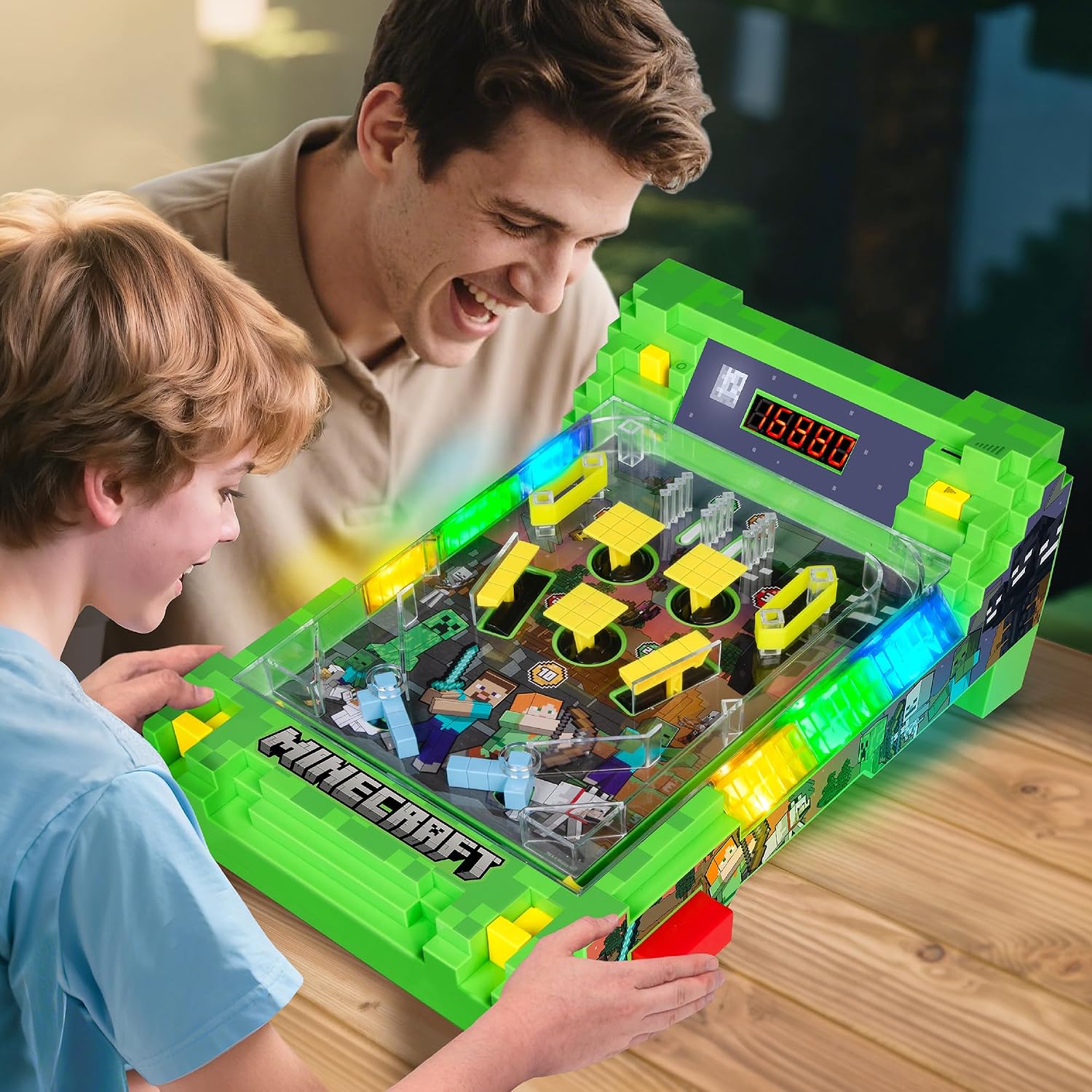
If you’ve ever walked past a small, self-contained pinball machine sitting on a desk or bar counter and wondered whether it was a serious toy or just a novelty paperweight — this article is for you. Tabletop pinball machines (sometimes called “mini pinball” or “desktop pinball”) are scaled-down versions of the full-sized arcade machines you’d find in a bowling alley or game room. They run on batteries or an AC adapter, sit flat on a surface, and let you flip a steel ball around a miniature playfield using tiny buttons on the sides. They range from a $20 plastic toy at a gift shop to a $300-plus officially licensed replica of a beloved arcade cabinet. That gap in price reflects a genuine gap in quality, playability, and — for collectors — long-term value. By the end of this piece, you’ll know exactly which end of that spectrum is worth your money, and why the answer depends on what you’re actually trying to accomplish.
| EDITOR'S PICK[Merchant Ambassador Electronic…](https://www.amazon.com/dp/B0C28R14WY?tag=greenflower20-20) | Mid-tier[BRIO 34017 Pinball Game - Class…](https://www.amazon.com/dp/B079X5HDWF?tag=greenflower20-20) | Budget pick[LEXiBOOK Batman Electronic Pinb…](https://www.amazon.com/dp/B09TF3J26Z?tag=greenflower20-20) | |
|---|---|---|---|
| Scoreboard | Dual LED | — | — |
| Features count | 10 | — | — |
| Obstacles | — | — | 5 |
| Light effects | ✓ | — | ✓ |
| Sound effects | ✓ | — | ✓ |
| Theme | — | — | Batman |
| Price | $169.99 | $74.99 | $39.99 |
| See on Amazon → | See on Amazon → | See on Amazon → |
What “Licensed” Actually Means — and Why It Matters Here
When a tabletop pinball machine carries a licensed theme — think a Stern Pinball-authorized Metallica, Deadpool, or Jurassic Park mini version, or a Hasbro-backed Star Wars desktop unit — it means the manufacturer paid for the rights to use the artwork, characters, and branding from that IP (intellectual property). That licensing fee has a downstream effect on two things: build quality and collectibility.
Licensed manufacturers are playing a longer game. Their mini pinball sits next to full-sized products that carry the same brand name, and they can’t afford for the tabletop version to feel like a joke. Stern Pinball’s tabletop line, as covered in Pinball News’s hardware roundup coverage across multiple 2023–2025 issues, consistently reflects the parent brand’s emphasis on physical flipper feel and playfield geometry that echoes the full machine. IPDB manufacturer and model records confirm that Stern-affiliated tabletop products maintain documented model lineage, which matters for parts traceability and collector provenance.
Generic tabletop machines — sold under house brands at big-box retailers, on third-party marketplaces, or through novelty gift channels — have no such accountability. They’re optimized for sticker price and shelf presence. The playfield geometry is often arbitrary, the flippers are frequently underpowered or inconsistently responsive, and the ball physics don’t approximate anything a real pinball player would recognize. That’s not a moral judgment; it’s the engineering reality of a product with no brand equity to protect.
The practical tradeoff: Licensed units cost two to five times more. Generic units look similar in product photographs. This is a genuine deception risk at point of purchase, especially when buying online.
Three Tiers Worth Knowing
Understanding the tabletop pinball market means recognizing that it splits into three meaningfully different tiers — not just “cheap” versus “expensive.” Each tier has a defensible use case, and buying the wrong tier for your context is the most common mistake intermediate buyers make.
Budget Novelty ($15–$60)
These are generic, unlicensed units manufactured without brand accountability. The playfield layout is arbitrary, the flipper mechanism relies on a passive spring or rubber band return, and the overall construction prioritizes unit cost over durability. Owners across hobbyist coverage in Pinball News consistently describe the flipper response on this tier as mushy or inconsistent — the ball rolls past the flipper during what should be a save, and the machine’s behavior doesn’t reinforce any real pinball intuition.
There is one legitimate use case for this tier: pure visual prop. If you need something that looks like a pinball machine for a photo shoot, stage set, or short-term display where no one will actually play it, the price efficiency is real. For any other purpose, the budget tier underdelivers.
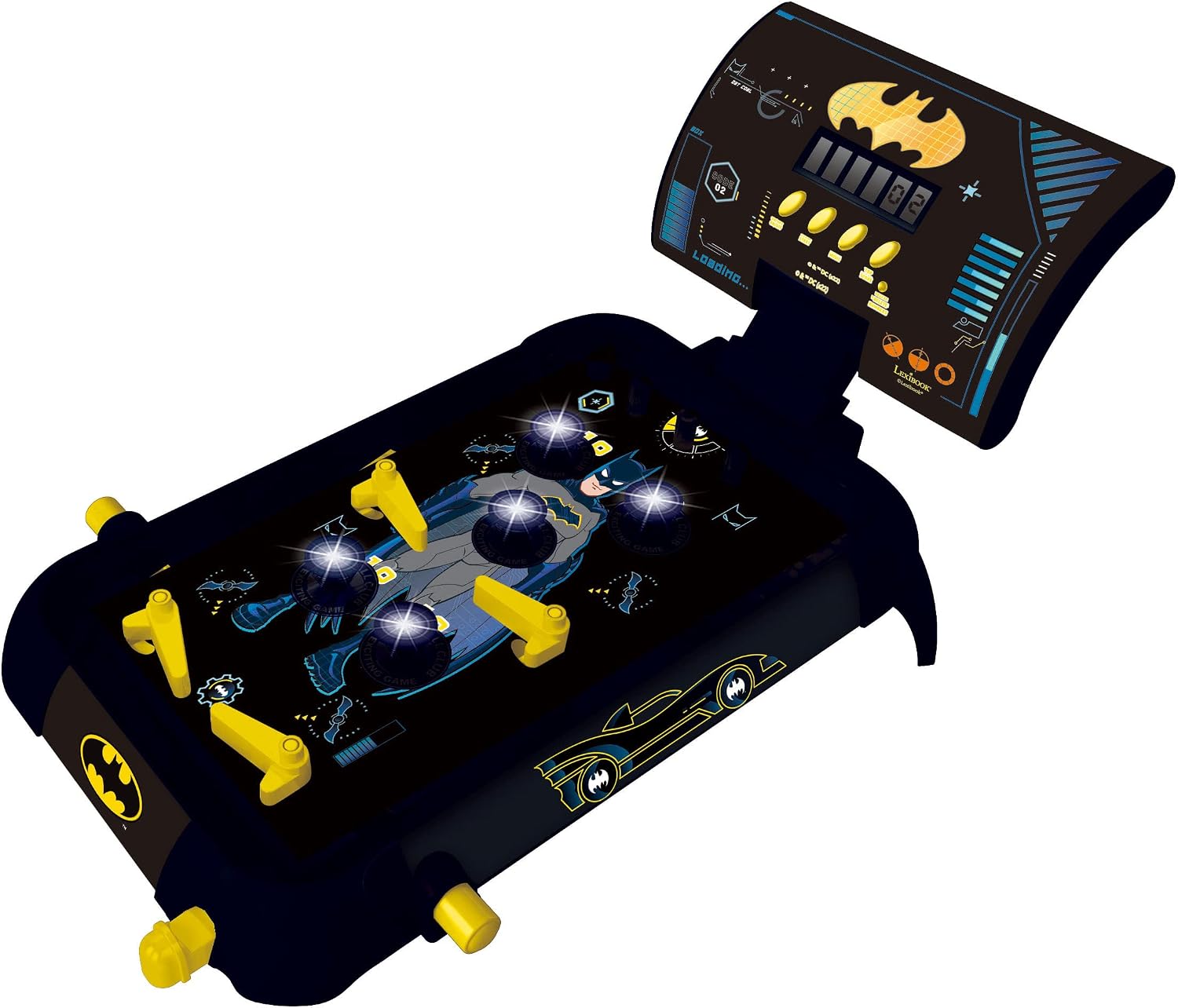
LEXiBOOK
$39.99
In stock on Amazon
Check price on AmazonMid-Tier Licensed ($80–$175)
This is the range where licensed IP and credible build quality first intersect. Units in this tier carry officially authorized artwork from real franchises — Hasbro’s Star Wars tabletop line, documented in IPDB manufacturer records, is the most widely distributed example — and use a spring-loaded flipper mechanism with a defined catch point that at least approximates a real machine’s rhythm. Popular Mechanics’ 2025 tabletop pinball buyer’s guide identifies this range as the practical entry point for buyers who want a machine that will hold a non-pinball-player’s attention past the first session.
This tier is well suited to office placement and gift purchasing. It’s credible enough to signal intentionality in a client-facing space, durable enough to survive handling by people who’ve never played a real machine, and priced so that a rough guest interaction isn’t a catastrophic loss.
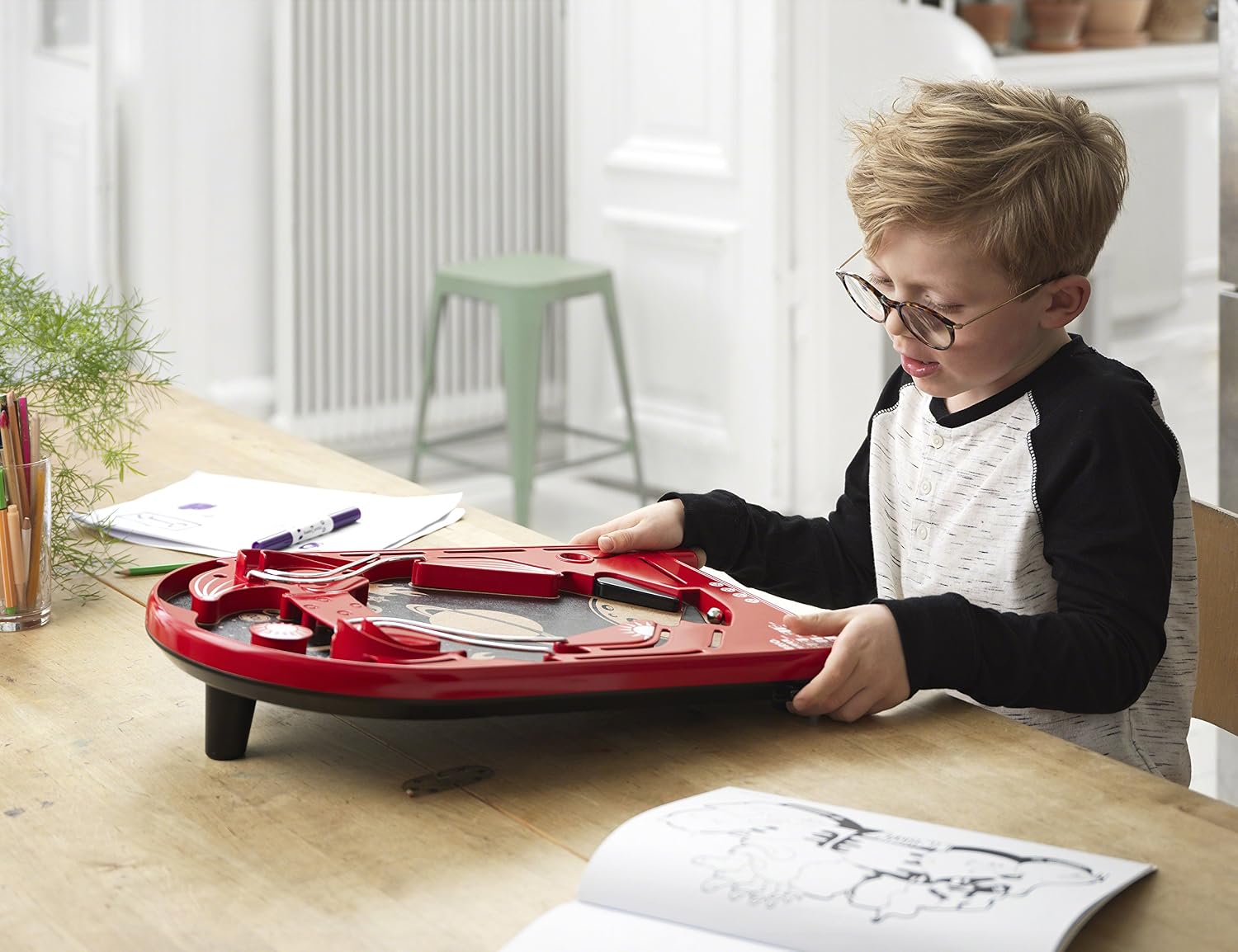
BRIO
$74.99
In stock on Amazon
Check price on AmazonPremium Licensed ($180–$350+)
The upper tier is where Stern Pinball’s tabletop and mini-cabinet line operates, along with a small number of boutique licensed releases. Build quality at this level includes more refined internal geometry, heavier-gauge playfield construction, and flipper mechanisms that Popular Mechanics’ 2025 buyer’s guide describes as producing a catch-and-shoot rhythm that experienced players will recognize. Pinball News’s secondary market tracking (2023–2025 coverage) indicates that discontinued runs in this tier show stable to modest price appreciation over 18–24 months on the secondary market — a meaningful contrast with the budget tier, which depreciates to near-zero.
If you’re adding a tabletop unit to a home game room that already contains full-sized machines, this is the only tier worth considering. Anyone in that room who plays real pinball will notice immediately when the flipper doesn’t behave right, and that perception contaminates the entire object.
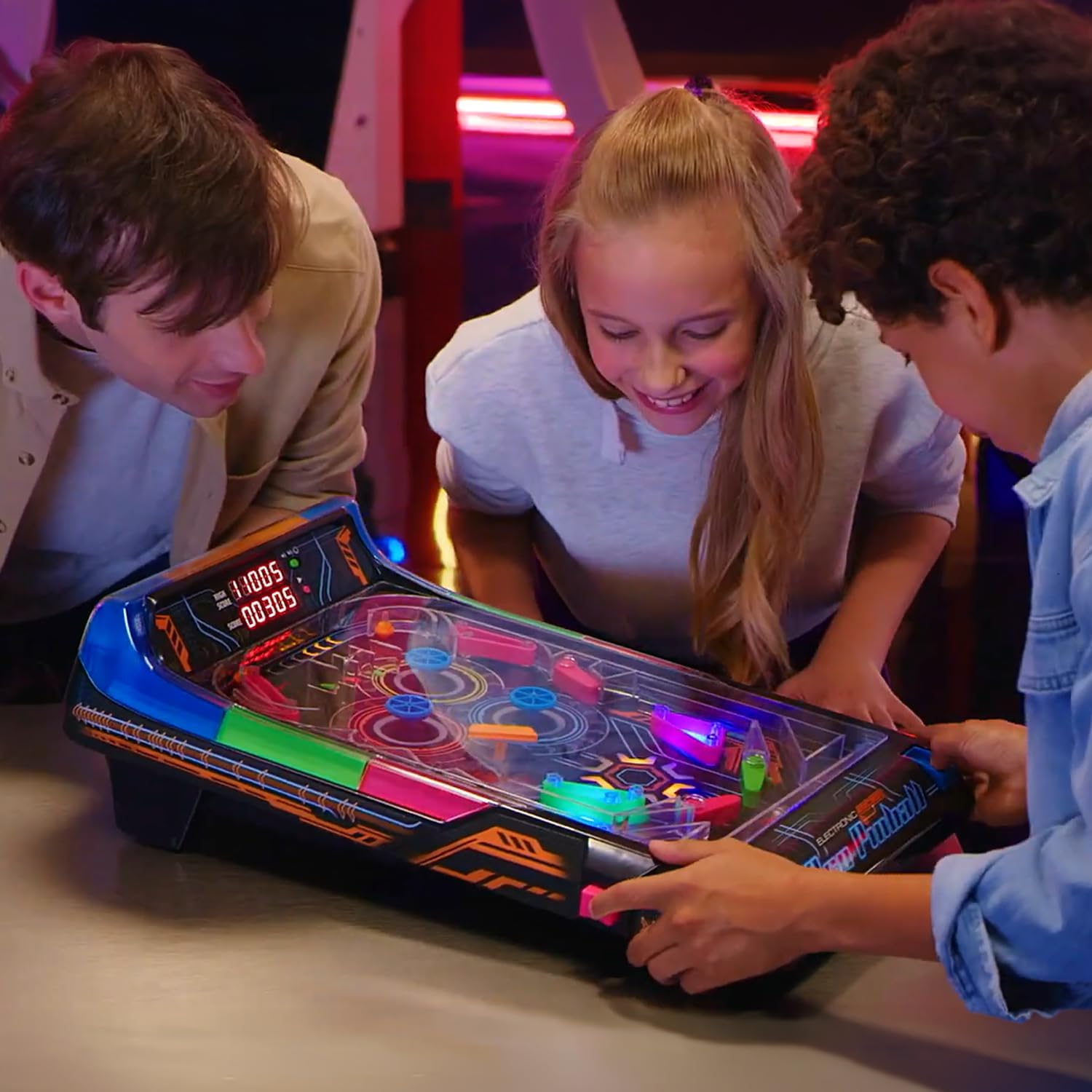
Merchant
$169.99
In stock on Amazon
Check price on AmazonThe Flip Test: How Playability Differs in Practice
The core mechanical issue that separates these tiers is flipper return speed, and it’s worth understanding the physics behind it.
In a full-sized machine, flippers are driven by solenoids — electromagnetic coils that snap the flipper up and return it cleanly at a speed calibrated to steel ball physics. Reproducing this at tabletop scale with any fidelity is expensive. Budget units skip it entirely, using a passive return that owners describe as slow and unreliable. The mid and premium tiers use refined spring-loaded mechanisms that, while still not solenoid-driven, produce a response consistent enough to allow intentional catch-and-shoot play.
This distinction matters more than it sounds. If you’ve played real pinball even casually, the budget mechanism will feel wrong immediately — not subtly wrong, but wrong in a way that makes the machine feel broken rather than scaled down. The mid and premium tiers avoid this uncanny valley problem. The machine still doesn’t play like a full-sized machine, but it plays like a competent small version of one, which is a psychologically different experience.
The office context specifically: If you’re buying a tabletop machine for desk use — ambient decoration, a two-minute break game, a conversation piece in a client-facing space — a mid-tier licensed unit satisfies that brief. Anyone who has played real pinball will give a licensed unit the benefit of the doubt for scale. They won’t give a generic unit any benefit at all.
Licensed Themes: Which IP Categories Hold Value
Not all licensed tabletop pinball holds the same collector value, and this is where intermediate buyers can make a meaningful edge decision.
Rock and music IP (Metallica, AC/DC, Guns N’ Roses): These themes have deep crossover appeal — fans who aren’t pinball players will pay a premium for branded desk objects. Pinball News’s secondary market tracking shows that discontinued mini runs from Stern’s licensed music portfolio maintain stable pricing over 18–24 months. Music IP tends to age well because the fan base doesn’t erode the way a film tie-in can after a sequel underperforms.
Film and TV IP (Star Wars, Jurassic Park, Spider-Man): High initial demand, but more volatile. A new entry in the franchise can spike or crater interest. IPDB manufacturer records show that Hasbro’s licensed Star Wars tabletop unit sold through multiple production runs — evidence of sustained commercial demand — but secondary market values on completed runs track closely with the theatrical and streaming release calendar of the relevant franchise.
Classic arcade IP at mini scale: This is the niche with the highest upside for a pinball-literate buyer. If boutique manufacturers expand into tabletop versions of titles with deep hobbyist nostalgia, the collector premium would likely be significant. Per Stern Pinball’s published product line documentation, no such crossover is currently in active release, but the category is worth monitoring.
Generic styling with no IP: Zero collector value. These are consumables. Budget accordingly.
Decision Framework: Home Game Room vs. Office Placement
Home game room: If you’re building a multi-machine lineup and want a tabletop unit, you’re buying a complement — something for a side table, a bar area, or a play zone that doesn’t compete with your full-sized machines. Spend in the $180–$300 range on a licensed title that thematically matches a theme already in your lineup, or represents a title you don’t own at full size yet. Per IPDB’s used-market records, entry-level full-sized machines in the $1,500–$2,500 range represent dramatically better value-per-play-hour than any tabletop unit — treat the tabletop as a taste of a theme before committing to the full machine, not as a substitute for one.
Office placement: The calculus is about durability and first-impression quality, not playability depth. Office tabletop machines get handled by people who don’t know how to play pinball and may not be gentle. The mid-tier licensed range ($80–$175) hits the right balance — credible enough to signal intentionality, not so expensive that a rough guest interaction is a painful loss. Avoid the bottom tier entirely; a broken plastic toy on a client-facing desk is worse than no machine at all.
Gift context: Licensed tier is the right floor at $80 minimum. Gifting a generic tabletop unit to someone who has seen a real machine in the last decade is a fast path to that object ending up in a drawer. The licensed unit has the visual language and play quality to hold attention past the first session.
The Mod and Customization Angle
One underappreciated factor: licensed units have a community around them. Pinball News coverage documents that owners of premium tabletop units engage in light modding — LED swaps, custom shooter rods at mini scale, custom-printed side art overlays. This community activity doesn’t exist around generic units because there’s no shared model identity to build on.
For a practitioner-level buyer, this matters for two reasons. First, a modded licensed tabletop unit photographs significantly better — important if you’re building a game room for social content or a commercial venue presence. Second, active mod communities signal that these objects have staying power in the hobby ecosystem, which correlates meaningfully with better secondary market liquidity when you eventually rotate the piece out.
The tabletop market is small but not trivial — and like most things in pinball, the gap between the right purchase and the wrong one is wider than the price tag suggests.