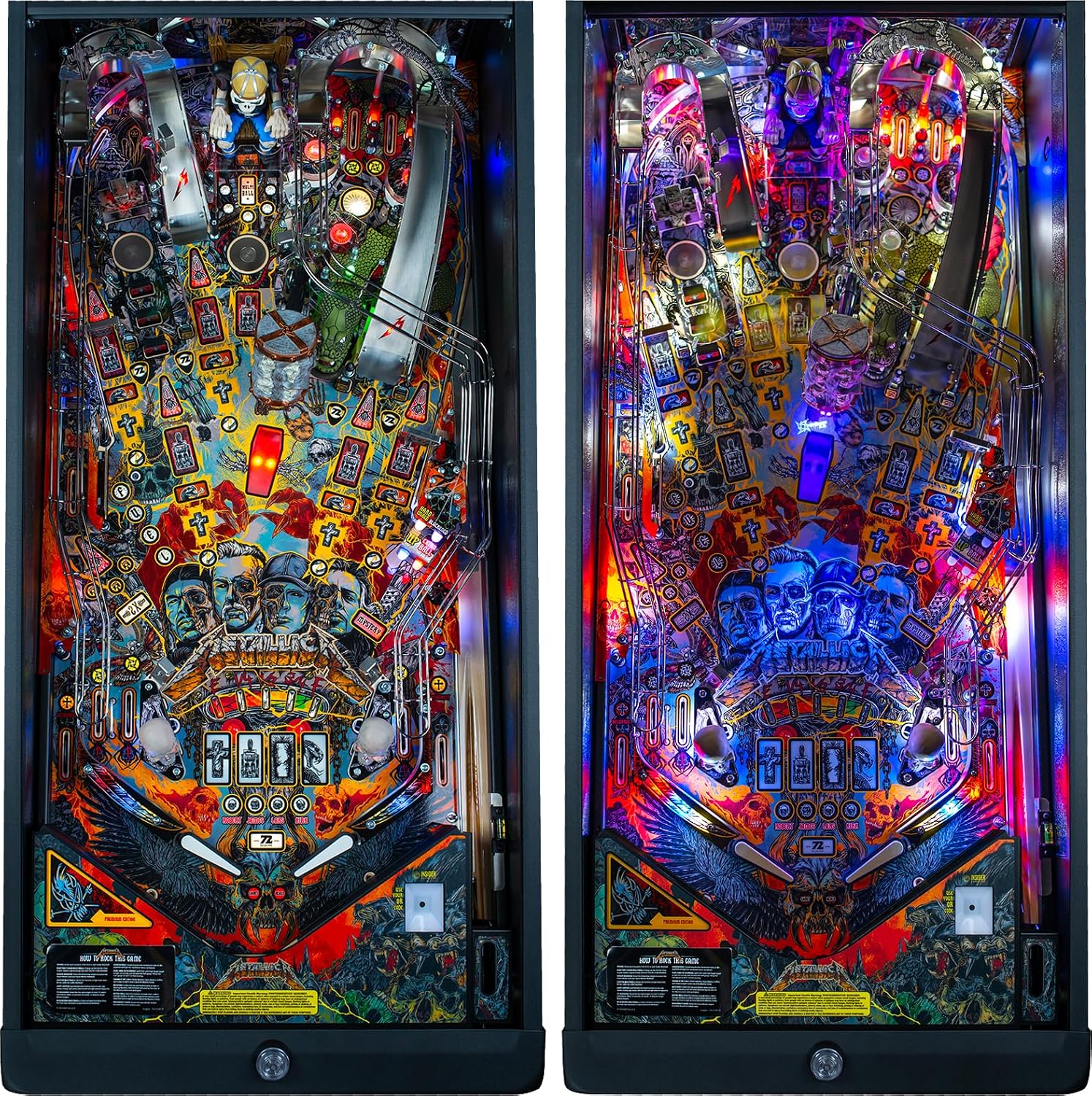
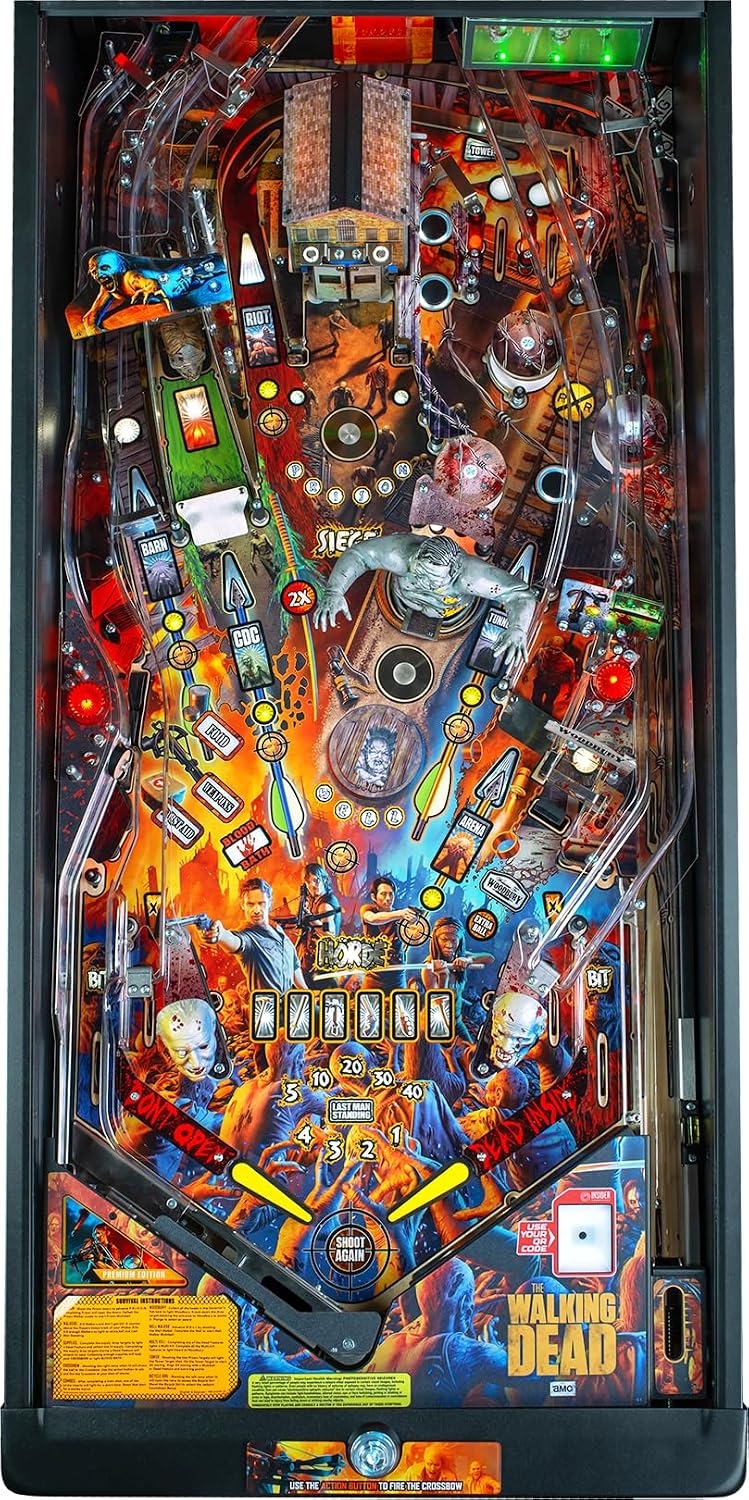
If you’ve been shopping for a home pinball machine, you’ve probably noticed that some older titles never really disappear from the conversation. Metallica and The Walking Dead are two of Stern Pinball’s most enduring designs — machines built in 2013 and 2014, respectively, that collectors still chase a decade-plus later. Stern Pinball, the Chicago-based company that manufactures the majority of new arcade-grade pinball machines sold in North America, has revisited both titles under what it calls its Remastered program: essentially the same physical game you remember, rebuilt on newer electronics, with a refreshed art package and updated software code. That last part — the code — matters more than it sounds. In pinball, “code” refers to the software that controls every rule, animation, scoring logic, and light show in the machine. A well-coded machine is deeper, fairer, and more replayable than an under-coded one. This article gives you an honest comparison between buying a Remastered edition new and hunting down an original on the used market — with real numbers, named tradeoffs, and a clear decision rule at the end.
What “Remastered” Actually Means — and What It Doesn’t Change
The Stern Remastered label is not a ground-up redesign. The playfield geometry — the physical layout of ramps, targets, loops, and bumpers that defines how the ball moves — is identical to the original. If you played Metallica Premium in 2014, the Remastered version will feel immediately familiar under the flippers. What Stern changed falls into three categories.
Electronics platform. Originals ran on Stern’s SAM (System Architecture for Machines) board set, a hardware platform that the Internet Pinball Database machine entries for both titles confirm was the production standard through mid-decade. Remastered editions move to Spike-2, Stern’s current-generation system. Spike-2 supports higher-resolution display content, faster processing, and — critically for long-term ownership — is the platform Stern actively manufactures parts for today. SAM boards are aging; replacement node boards and display components are available but increasingly sourced through specialty vendors rather than Stern directly.
Code and display content. Both Metallica and The Walking Dead received code updates under the Remastered program that expand rules, fix longstanding bugs, and add new callouts and animations. Pinball News, in its coverage of the Metallica Remastered announcement, noted that the updated code incorporates rule refinements the community had requested for years. This is a meaningful upgrade: owners of original SAM-era Metallicas can still load the latest code builds, but certain display assets and feature logic are tied to the Spike-2 hardware on Remastered units.
Art and cosmetics. Remastered cabinets ship with updated cabinet art and translite graphics — the illuminated backglass panel behind the score display. Some collectors prefer the original art; others appreciate the refresh. This is largely a matter of taste and shouldn’t drive your buying decision unless the aesthetic is the primary draw.
What the Remastered program does not deliver: new toys, a redesigned playfield, or additional physical features beyond what the original Premium offered. It is a platform migration with code polish, not a hidden-feature upgrade. That distinction matters when you’re doing the math.
The Price Gap: By the Numbers
Used-market pricing drawn from Tilt Forums collector transaction threads and Stern Pinball MSRP figures as of early-to-mid 2026:
| Version | Typical Price Range (May 2026) |
|---|---|
| Metallica Premium (SAM, 2013–2014 original) | $4,200 – $5,800 |
| Metallica Remastered Premium (Spike-2, new) | ~$8,499 MSRP |
| Walking Dead Premium (SAM, 2014 original) | $3,800 – $5,200 |
| Walking Dead Remastered Premium (Spike-2, new) | ~$7,999 MSRP |
The spread is roughly $2,500 to $3,500 depending on condition and timing. That gap is your core decision variable. Everything else in this article is about whether what you get for that delta is worth it to you specifically.
Comparing the Options: Three Buyer Profiles
The right answer genuinely differs by how you use machines, how many you plan to own, and how much you want to handle maintenance. The following three subsections break the comparison across the buyer profiles that show up most often in Tilt Forums discussions and dealer conversations.
The Single-Machine Home Buyer
For a buyer who wants one machine, plans to own it for five or more years, and doesn’t want to become an electronics troubleshooter, the Remastered edition is the stronger recommendation.
Parts longevity is the leading argument. Spike-2 is Stern’s active platform — the same board architecture running current titles available through stern-pinball.com today. When you need a node board replaced or a display serviced, Stern’s dealer network and parts vendors stock Spike-2 components as a matter of routine. SAM parts remain available but require more deliberate sourcing as the platform ages. For buyers who want a machine that runs without significant maintenance overhead, Remastered is the lower-friction path.
Code quality has a real floor. The updated Remastered code isn’t just bug fixes — it’s a more complete game. Tilt Forums threads on the Walking Dead Remastered consistently note that revised multiball stacking rules and updated Zombie mode logic make the back half of a skilled game feel more intentional than the original release. For players who play daily, a deeper ruleset compounds in value over time.
Warranty and new-machine peace of mind. Buying Remastered through an authorized Stern dealer means a manufacturer warranty, a new-condition playfield, and no ownership history to untangle. Used machines — even well-maintained examples — carry uncertainty: prior operator use, non-standard mods, worn rubber, playfield wear under inserts. Evaluating a used Premium correctly requires either your own technical confidence or a paid inspection, both of which have real costs.
Stern
$9,699.00
In stock on Amazon
Check price on AmazonThe Multi-Machine Lineup Builder
For the intermediate collector building out a game room with $8,000 to $9,000 to work with, the original used market often delivers more total play value than a single Remastered unit.
The price gap buys you a second machine. At $3,000 to $3,500 in savings, a patient buyer can acquire an original Metallica Premium in solid condition and have enough remaining budget for a meaningful second title. Two games in rotation is a fundamentally different experience than one, regardless of platform. Lineup diversity — a Metallica alongside a Walking Dead Pro, for instance — provides variety in rules, toys, and theme that no single machine can replicate.
SAM code is mature and stable. The original SAM builds for both titles have been updated through late-stage code versions. Internet Pinball Database code history entries for Metallica document a long tail of community-driven refinements. These are not broken or shallow games. Players who aren’t chasing competitive edge or daily-driver code depth will likely never feel the meaningful delta between SAM and Spike-2 versions during actual play sessions.
Originals offer a richer modification ecosystem. The pinball modification community has years of aftermarket development behind both SAM-era titles. Shooter rod upgrades, topper kits, speaker panel enhancements, and custom-lit backglass mods for original Metallica and Walking Dead are plentiful, well-documented, and often available as plug-and-play kits. Remastered editions, being newer, have a thinner aftermarket catalog by definition. For collectors who view modding as part of the hobby, originals offer more to work with today.
Playfield condition shopping is a real lever. A Metallica Premium from a private collector who bought new, played lightly, and maintained it properly can be in genuinely excellent mechanical condition. Playfield wear under inserts — a failure mode that Pinball Magazine has covered in restoration guides — is the primary thing to inspect. A clean example sidesteps most platform concerns entirely, and the risk premium on a well-selected original is much lower than the price gap implies for a buyer with the technical literacy to evaluate it.
Stern
$9,699.00
In stock on Amazon
Check price on AmazonThe Route Operator or Commercial Buyer
For route operators evaluating either title for commercial deployment, the calculus shifts decisively toward Remastered.
Parts supply chain and diagnostic tools favor Spike-2 at scale. Spike-2’s software diagnostic tools, remote monitoring compatibility, and active parts supply chain reduce downtime risk in ways that matter on revenue-generating machines. A single SAM board failure on a route machine is a service call and a parts search; a comparable Spike-2 failure resolves faster through Stern’s active support infrastructure. Tilt Forums operator threads — which aggregate long-run deployment experience across commercial locations — consistently flag parts availability as the primary Spike-2 advantage in commercial contexts.
Warranty eliminates early-run uncertainty. Commercial environments are harder on machines than home use. A new Remastered unit purchased through an authorized Stern dealer arrives with full warranty coverage, which offsets a meaningful portion of the MSRP premium against avoided service costs in the first year of operation.
The maintenance math is different at scale. For a single-location venue or home operator with technical staff on hand, an original SAM unit remains viable. But for any operator running multiple machines across locations without dedicated technical staff, the Remastered version is the lower-maintenance default. The premium is an operational cost, not just a collector cost.
Stern
$9,699.00
In stock on Amazon
Check price on AmazonThe Decision Rule, Stated Plainly
Three clear answers emerge from the comparison:
Buy Remastered if you’re purchasing one machine for long-term ownership, you want minimal maintenance overhead, or you’re operating machines commercially. The Spike-2 platform’s parts longevity, updated code depth, and warranty coverage justify the premium for these use cases.
Buy original if you’re building a multi-machine lineup and the price gap funds a second title, or you’re a technically confident buyer who will inspect the machine carefully before purchase. Two solid SAM-era machines in rotation outperform one Remastered unit for play variety at the same total budget.
Buy Remastered without exception if you’re an operator. The parts and support infrastructure justifies the premium before the first service call you don’t have to make.
One additional note for collectors focused on resale trajectory: Pinball News has observed that Remastered runs tend to be production-constrained rather than open-ended, which historically creates a tighter supply ceiling than original run titles that shipped in large quantities. This isn’t a guaranteed investment thesis, but it’s a factor worth considering if you plan to sell within three to five years. If you’re buying Remastered for value appreciation, purchase from an authorized dealer at or near MSRP — units bought above MSRP compress whatever upside exists.
The originals are not bad machines. They are, physically, the same game. But “same game on aging hardware” is a real consideration at this price tier, and the Remastered program exists precisely because Stern knows collectors understand the difference. The honest conclusion is that both options can be correct — the wrong move is buying either one without first doing the math on what the price gap actually buys you.
Pricing sourced from Tilt Forums collector transaction threads and Stern Pinball MSRP as of May 2026. Machine histories and production data per Internet Pinball Database entries for Metallica (2013) and The Walking Dead (2014). Platform and code analysis informed by Pinball News Remastered program coverage and Pinball Magazine reporting on Stern’s Spike-2 platform transition.