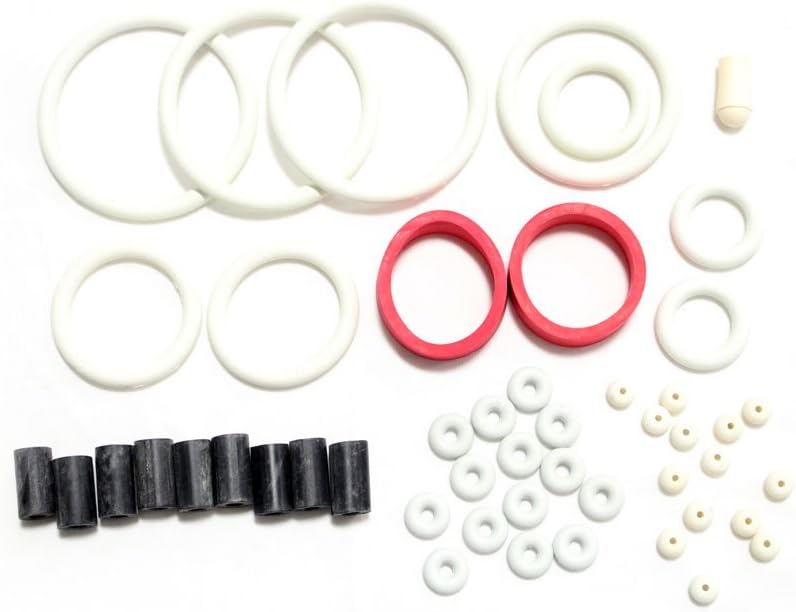
If you’ve ever watched a pinball careen sluggishly off a bumper or lose energy mid-lane, worn rubber might be the culprit — and it’s a cheaper fix than almost anything else in the hobby. Every pinball machine is ringed with small circular rubber bands (called rubber rings or simply rubbers) that wrap around the posts and bumpers on the playfield — the sloped, decorated surface where the ball actually rolls. These rings create bounce and rebound energy; when they age and harden, the game literally becomes less fun to play and harder on the ball. A full rubber ring replacement kit for a classic machine typically runs $15–$40 and takes an afternoon. If you’re maintaining your first machine or building out a game room lineup, understanding which kit to buy — and why the wrong choice wastes both money and time — is foundational knowledge worth nailing down before anything else.
| EDITOR'S PICK[Game Room Guys Williams Medieva…](https://www.amazon.com/dp/B004DR23HO?tag=greenflower20-20) | Mid-tier[Game Room Guys 1976 Bally Fireb…](https://www.amazon.com/dp/B004DQUGUG?tag=greenflower20-20) | Budget pick[Game Room Guys Stern Star Wars…](https://www.amazon.com/dp/B088B9W5Q2?tag=greenflower20-20) | |
|---|---|---|---|
| Color | White | — | Black |
| Machine Era | — | 1976 | — |
| Game Theme | Medieval Madness | Fireball | Star Wars |
| Target Title | Williams | Bally | Stern |
| Model Type | — | Home Pinball | Pro |
| Price | $35.99 | $30.99 | $28.99 |
| See on Amazon → | See on Amazon → | See on Amazon → |
Why Rubber Rings Matter More Than Most Owners Realize
The rubber rings on a pinball machine do two jobs simultaneously: they define how aggressively the ball rebounds off posts and bumpers, and they protect the machine’s metal posts from the direct wear of steel-ball contact. New rings are supple and grippy; aged rings get hard, crack, or flatten and change the feel of the entire game. If you’ve played a machine that felt “dead” compared to your memory of it, nine times out of ten it hasn’t been rerubbered in years.
Beyond feel, there’s a durability argument that operators and serious collectors both care about. Per Stern Pinball’s official service documentation, rubber rings are classified as a consumable with recommended replacement at regular service intervals — not a one-time install. On route-use machines running hundreds of plays per week, that interval can be as short as every few months. For a home machine averaging 10–20 plays a week, most practitioners report two to four years of usable life from a good-quality ring set before hardening becomes noticeable.
The IPDB (Internet Pinball Database) detail pages for individual machines list component counts — including post and bumper counts — that directly inform how many rings a complete kit needs to include. A late-1990s Williams machine like Twilight Zone or Medieval Madness can easily require 60 or more individual rings across multiple sizes. Getting the count wrong means ordering a second kit and waiting again.
Silicone vs. Natural Rubber: The Tradeoff That Actually Matters
This is the decision most first-time buyers skip, and it costs them either money or satisfaction.
Natural rubber rings (the traditional choice, standard in factory kits) are slightly tacky, which gives the ball a characteristic “snap” off posts. They’re inexpensive, they’re what the machine was designed around, and they’re widely available from every major parts vendor. The downside: they oxidize and harden faster than silicone, and they leave residue on the playfield over time that has to be cleaned off. Tilt Forums community threads consistently document this as a maintenance friction point, particularly on machines that sit unplayed for months.
Silicone rings run harder and smoother at first contact. They don’t leave the same residue, they resist aging better in dry or climate-variable environments, and owners in long-run reviews generally report they outlast natural rubber by a meaningful margin. The tradeoff: silicone changes the ball behavior. The ball rebounds faster and with less friction, which some players love and some hate — and which can make a game feel noticeably different from factory spec. On a tournament-set machine where rules and shot geometry are calibrated around natural rubber, silicone can alter ball times enough to matter.
The practical decision rule: If you’re maintaining a home machine you play casually and want low-maintenance longevity, silicone is worth the slight premium. If you’re restoring a machine to compete-ready or resale condition, or if you’re an operator standardizing a fleet, natural rubber is the correct choice for consistency and cost-per-unit economics.
Machine-Specific Kit Buying: Williams, Bally, and Stern Platforms
The three platforms most collectors and practitioners are working with have meaningfully different rubber profiles, and this is where buying a “generic” kit gets you into trouble.
Williams WPC and WPC-95 Machines (Early 1990s–1999)
Williams machines from this era — think Theater of Magic, No Good Gofers, Monster Bash, Funhouse — are among the most collected and restored machines in the hobby. They share a broadly consistent rubber profile set, which is why machine-specific kits are easy to source. Per Pinball News coverage of WPC-era maintenance, these machines typically need a mix of sizes ranging from 7/16-inch post rings up to the larger 3-inch rings used on slingshots (the triangular kickers on either side of the lower playfield that punch the ball sideways).
What to look for: A Williams WPC-specific kit from a reputable vendor like Marco Specialties, Pinball Life, or Planetary Pinball Supply will be organized by machine title and include a printed or digital sizing manifest. Don’t buy a bulk generic assortment for a WPC machine — size accuracy on the flipper return lane posts in particular affects ball control more than most buyers anticipate.
Bally Classic Machines (1970s–Early 1990s)
Older Bally solid-state machines — the kind you’re picking up in the $1,500–$3,000 range — use a similar rubber taxonomy to Williams, with some platform-specific differences in bumper cap ring diameter. IPDB machine pages are the fastest reference here: look up your specific title, note the rubber count and any size notes in the technical specs, and cross-reference against vendor kit listings before ordering. For older EM (electromechanical) Bally titles from the 1970s, the ring sizes get more unusual, and a generic WPC kit won’t cover everything.
One thing Bally collectors in long-run Tilt Forums discussions flag consistently: older machines stored in garages or warehouses often have rings that have essentially vulcanized to the posts. Factor in that you may need a post-ring removal tool — a cheap but specific instrument — before you can even get to the install.
Stern Modern Machines (Spike and Spike-2 Platform, 2014–Present)
Stern’s contemporary machines use a more standardized rubber set, partly because the Spike and Spike-2 platforms were designed with serviceability in mind. Per Stern Pinball’s parts documentation, machine-specific rubber kits are available through their authorized distributor network and are catalogued by title. For a machine like Deadpool Pro or Jurassic Park Pro, a Stern-official kit is usually the cleanest buy: it ships with the correct count, includes the flipper lane rubber (a slightly different profile than post rings), and avoids the size-matching guesswork.
Where practitioners sometimes diverge from the official kit: on Stern Premiums and LEs with more complex playfield layouts — extra ramps, upper playfields, additional post banks — the official kit count can come up short on one or two sizes. Veteran operators on Tilt Forums recommend ordering one spare bag of 3/8-inch post rings alongside any official kit for Stern Premium and LE titles, because those configurations tend to have higher post counts in the upper playfield that occasionally get undercounted.
By the Numbers
| Platform | Typical Ring Count (Full Kit) | Approx. Kit Cost (2026) | Silicone Upcharge |
|---|---|---|---|
| Williams WPC classic (e.g., Monster Bash) | 55–70 rings | $18–$28 | +$8–$14 |
| Bally solid-state (1980s title) | 40–60 rings | $15–$22 | +$6–$12 |
| Stern Spike/Spike-2 Pro | 35–50 rings | $20–$30 | +$8–$15 |
| Stern Spike-2 Premium/LE | 50–70 rings | $25–$38 | +$10–$18 |
Pricing reflects mid-2026 vendor list pricing. Route operators buying multi-unit quantities typically negotiate 15–20% volume discounts from major distributors.
Where to Buy and What to Avoid
The three vendors the intermediate collector community consistently points to are Marco Specialties, Pinball Life, and Planetary Pinball Supply. All three organize their kits by machine title, maintain reasonably current stock (an important consideration given occasional supply tightness on older Bally-specific sizes), and include sizing manifests that let you verify the kit against your machine’s IPDB listing before you commit.
Generic bulk ring assortments from non-pinball-specific vendors are a trap for practitioners. They’re often cheaper per-ring, but they ship in unlabeled bags, the size distribution doesn’t match any specific machine, and you’ll spend time sorting and measuring that defeats the economics entirely. If you’re stocking a parts drawer with backup rings — a reasonable move once you’re managing two or more machines — buy machine-specific spares in the one or two sizes you use most, not a grab-bag.
One more thing worth naming: flipper rubbers are not included in most standard ring kits. Flipper rubbers — the cylindrical sleeve that fits over the flipper bat itself — are sold separately, and they wear on a different schedule than post rings. Per Pinball News maintenance coverage, flipper rubbers on a regularly played machine typically need replacement every 12–18 months on a home game, more frequently on route use. Order them alongside your ring kit so you’re doing one teardown, not two.
The Decision Framework
Here’s where this lands for a practitioner with a machine in hand:
If you have a Williams WPC or Bally solid-state title: Buy a machine-specific kit from Marco Specialties or Pinball Life, matched to your IPDB title listing. Choose natural rubber unless you’re planning to keep the machine long-term in a climate-variable space, in which case silicone is worth the upcharge for longevity.
If you have a Stern Spike or Spike-2 Pro: The Stern-official kit through an authorized distributor is the cleanest path. It’s priced competitively, it’s correct for your title, and it simplifies the parts paper trail if the machine is under any warranty period.
If you have a Stern Premium or LE: Buy the official kit and add one spare bag of 3/8-inch post rings based on community-documented undercounting on complex upper playfield layouts.
If you’re managing a multi-machine room or small route: Natural rubber in bulk from a single vendor, organized by the three or four sizes that cover 80% of your fleet, will cut your per-machine cost meaningfully. Track replacement dates per machine; the Tilt Forums maintenance thread archives include simple logging templates that operators have shared publicly.
The rubber kit is never the exciting purchase. But it’s the one that makes every subsequent session feel like playing a new machine — and for a $20–$40 call, that’s a ratio that holds up.