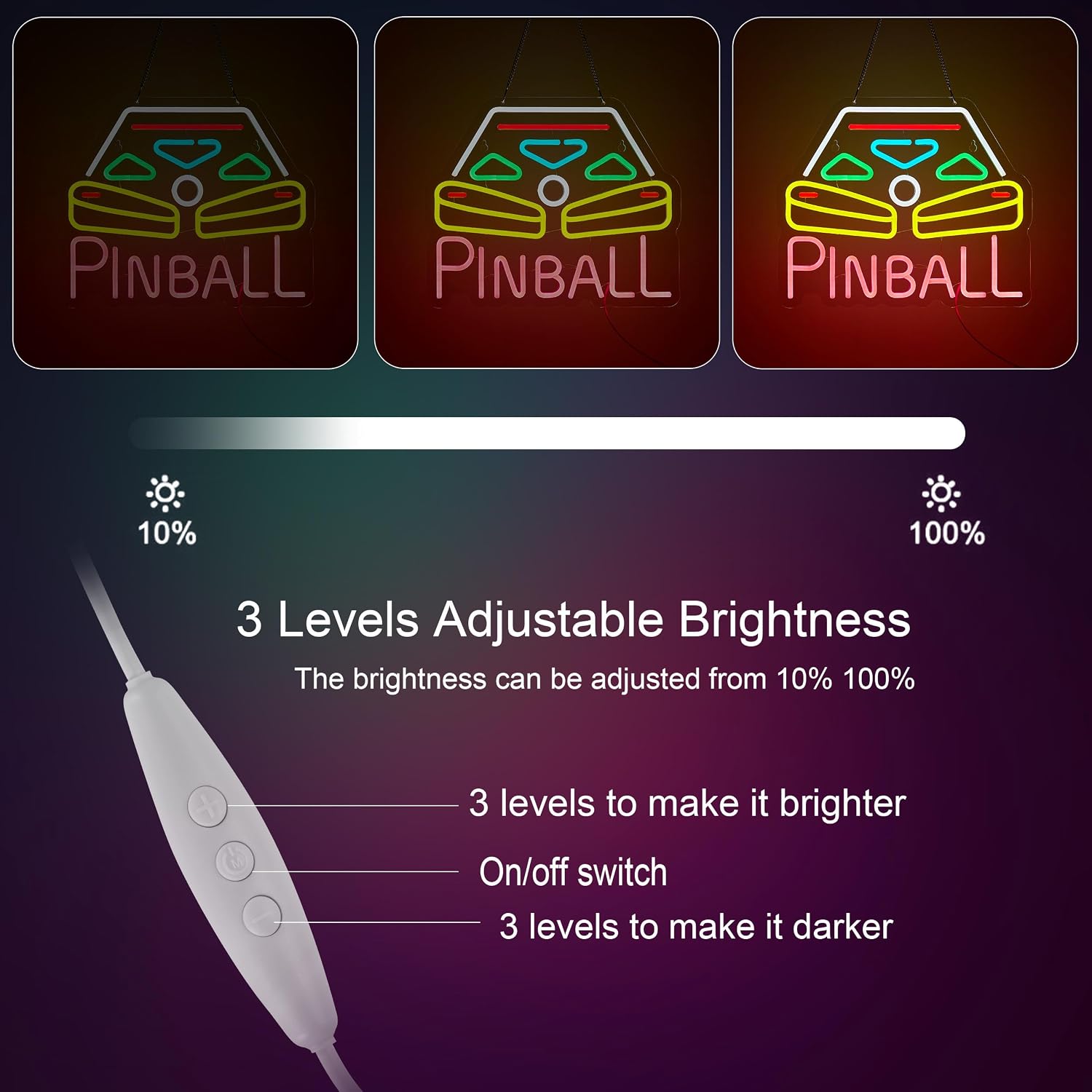
If you’ve ever walked into a game room that stopped you in your tracks — the kind where the machines glow like they belong there, where the walls feel intentional rather than random — you’ve seen good décor doing quiet, serious work. Neon signs (and their modern LED-neon equivalents, which mimic the warm glow of traditional glass-tube neon using flexible LED strips behind a silicone diffuser) are one of the cheapest-per-square-foot ways to set that tone. But the gap between a sign that elevates your space and one that makes it look like the inside of a Spirit Halloween is enormous. If you’re somewhere in the middle of building out a dedicated pinball room — maybe you’ve got two or three machines and a fourth on the way — this guide is for you. We’ll walk through what to look for, what to skip, and how to think about the tradeoffs between authentic glass neon and its LED-neon alternatives so you can make a call that fits your room, your budget, and the machines you’ve already invested in.
Glass Neon vs. LED Neon: The Tradeoff Nobody Fully Explains
This is the first decision, and it’s worth getting right because it affects everything downstream — budget, longevity, maintenance tolerance, and visual character.
Traditional glass neon is exactly what it sounds like: noble gas (neon, argon, or a mix) sealed in hand-bent glass tubes, electrified by a transformer to produce that iconic warm, slightly buzzy glow. The visual quality is genuinely different from anything else — glass neon has depth, slight variation in brightness along the tube, and a warmth that reads as analog in the best way. It also hums faintly at low frequencies, which some collectors find charming and others find maddening. Popular Mechanics’ overview of neon sign technology notes that glass neon transformers typically operate at 2,000–15,000 volts and require professional installation or at minimum careful handling; they are not a set-and-forget proposition if a tube cracks or a transformer fails.
LED neon (sometimes called “flex neon” or “neon flex”) uses a silicone jacket over an LED strip to approximate the look of glass neon at a fraction of the cost, weight, and fragility. The Signage Foundation’s published guidance on LED sign longevity rates quality LED neon strips at 50,000+ hours of rated life, compared to roughly 8,000–15,000 hours for glass neon before recharging or tube replacement becomes necessary. LED neon runs cool, is shatter-resistant, and is significantly easier to hang and relocate — relevant if your game room is still evolving.
The honest tradeoff: Glass neon looks better to a trained eye, especially in photographs and in rooms where the sign is a focal point. LED neon wins on every practical metric — cost, lifespan, maintenance, and safety near machines with playfield glass. If your room is a collector’s showroom, glass neon for one or two anchor pieces makes sense. If you’re running four machines and want ambient light without maintenance overhead, LED neon is the correct answer for everything except your hero piece.
By the Numbers
| Factor | Glass Neon | Quality LED Neon |
|---|---|---|
| Typical price (custom, 18–24”) | $300–$800+ | $80–$250 |
| Rated lifespan | 8,000–15,000 hrs | 50,000+ hrs |
| Heat output | Moderate–high | Low |
| Fragility near machines | High (glass) | Low (silicone) |
| Maintenance | Transformer + recharge | Near-zero |
What to Actually Buy: Criteria That Separate the Good Stuff
Once you’ve decided on the medium, the next variable is quality within that category — and this is where most buyers go wrong. The $30 generic LED neon signs you’ll find at mass retailers are built to a price point that shows within 18 months: uneven illumination along the strip, color shift as the LEDs age, cheap acrylic backboards that yellow under UV, and controllers that flicker or fail. Across aggregated reviews on enthusiast forums including Tilt Forums’ dedicated game room build threads, the consistent report from collectors who’ve gone through multiple sign iterations is the same: the cheap signs look fine in a product photo and mediocre in a real room.
Here’s what to look for in a quality LED neon sign:
1. Silicone diffuser, not PVC. Silicone holds color better over time and doesn’t become brittle. Manufacturers who specify silicone tubing in their product specs are the ones worth considering. PVC-jacketed signs are typically budget tier.
2. Acrylic backboard thickness. Quality signs use 5–8mm acrylic; budget signs use 3mm or thinner, which flexes and looks cheap on the wall. Architectural Lighting Magazine’s coverage of residential entertainment lighting notes that backboard rigidity affects perceived quality more than almost any other single physical variable.
3. Color temperature intentionality. This matters more in a pinball room than almost anywhere else because your machines are already producing light — and a lot of it. Most Stern titles with Spike-2 hardware (the electronics platform used in Stern machines from roughly 2016 onward) output warm-to-neutral backglass lighting. A sign in the 2700K–3000K range (the warm yellow-white of incandescent light) tends to read as intentional and complementary. A sign in the 6000K+ range (cool blue-white) can fight with playfield illumination and make a room feel visually chaotic. If a manufacturer doesn’t publish color temperature, that’s a signal.
4. Dimmer compatibility. A sign you can’t dim is a sign you’ll eventually hate. The best game room lighting is layered — machines up full, ambient neon at 40–60%. Owners consistently report that non-dimmable signs create eye fatigue during longer play sessions.
5. For glass neon specifically: buy from a domestic studio with a physical address and repair service. The cost premium over imported glass neon (often $100–200 more per piece) buys you actual recourse when a transformer dies.
Themes and Imagery That Work in a Pinball Context
This is the part that’s hardest to get right without thinking it through in advance. A pinball game room has a specific visual register — it’s somewhere between an arcade, a mid-century rec room, and a collector’s gallery. That context accepts some imagery naturally and rejects other imagery just as naturally.
What works:
-
Abstract geometric shapes and typography. A clean “GAME ROOM” or “PLAY MORE” sign in a retro-display font reads as intentional without competing with your machines’ specific art packages. These are the safest picks for rooms with mixed theme machines — say, a Deadpool Pro (comic-pop art style) next to a Stern Godzilla (cinema-monster imagery) next to a Jersey Jack Guns N’ Roses LE (arena-rock aesthetic).
-
Vintage arcade and mid-century imagery. Joysticks, score counters, starburst shapes, and retro rocket imagery all sit comfortably in the visual grammar of a serious game room. They reference the era without feeling like a licensed product tie-in.
-
Single-machine-specific signage used sparingly. If you have a dedicated machine that anchors the room — a Chicago Gaming Medieval Madness Remake, for instance, or a Spooky Pinball ACNC — one piece of thematically matched signage positioned near that machine can work beautifully as a focal point. The mistake is theming every sign to every machine; it reads as unedited rather than curated.
What doesn’t work:
Generic “Man Cave” or “Game On” signs from big-box retailers. These are not inherently bad objects, but they signal a décor decision made without conviction, and a serious game room with $15,000–$40,000 worth of machines underneath them looks incongruous. The machines deserve better wall company.
Overly bright, saturated RGB signs — the type that cycle through color sequences — create visual competition with playfield lighting and backglass artwork. Across enthusiast discussions on Tilt Forums and Pinside, the consistent sentiment from collectors who’ve iterated on their room setups is that static or slowly breathing single-color signs read as more sophisticated than animated color-cycling options.
Placement Logic for Pinball Rooms Specifically
A few principles that come out of how pinball rooms actually get used:
Keep signs out of the direct sightline when playing. The ideal neon placement is peripheral — above or beside the machine, not directly behind the backglass where it competes. Tilt Forums’ game room build threads consistently show layouts where neon lives on side walls or above the machine line rather than behind it.
Mind the electrical load. A dedicated game room running three to five machines is already asking significant things from its circuits — Stern’s Spike-2 platform draws approximately 3–5 amps per machine at peak, and LE titles with dense LED payloads can hit the higher end. Quality LED neon signs draw 15–30 watts; glass neon transformers can draw 35–100 watts per sign. Budget your outlets accordingly and don’t share circuits with machines.
Height matters. Signs hung at or above eye level (66”+ from floor) read as ambient and intentional. Signs hung at machine height compete visually with the backglass. If you’re hanging something below 66”, it should be small — under 18” — and very deliberately placed.
The Decision Rule
Here’s the if/then frame for making the call:
If your room is a collector’s showcase and you’re spending $10,000+ on machines, invest in one or two pieces of authentic glass neon from a domestic studio for your anchor wall. Budget $400–$700 per piece, treat them as long-term fixtures, and fill supporting walls with quality LED neon in complementary colors.
If your room is a working game room that’s still evolving — machines rotating in and out, layout not yet fixed, budget tighter — go LED neon across the board. Spend the money you save on a better sign ($150–$250 range rather than $40–$80) and prioritize silicone diffusers, dimmability, and warm color temperature. Owners in long-run reviews consistently report that the $150 range from quality-tier sign makers holds up meaningfully better than anything below $80.
If you’re running a commercial space — a barcade, a route operation with a dedicated player lounge — glass neon is a maintenance liability. LED neon only, commercial-grade, and factor replacement cost into your site budget every 4–5 years as routine operating expense.
The machines are the stars. The neon’s job is to say that this room was put together by someone who cared — and then get out of the way.