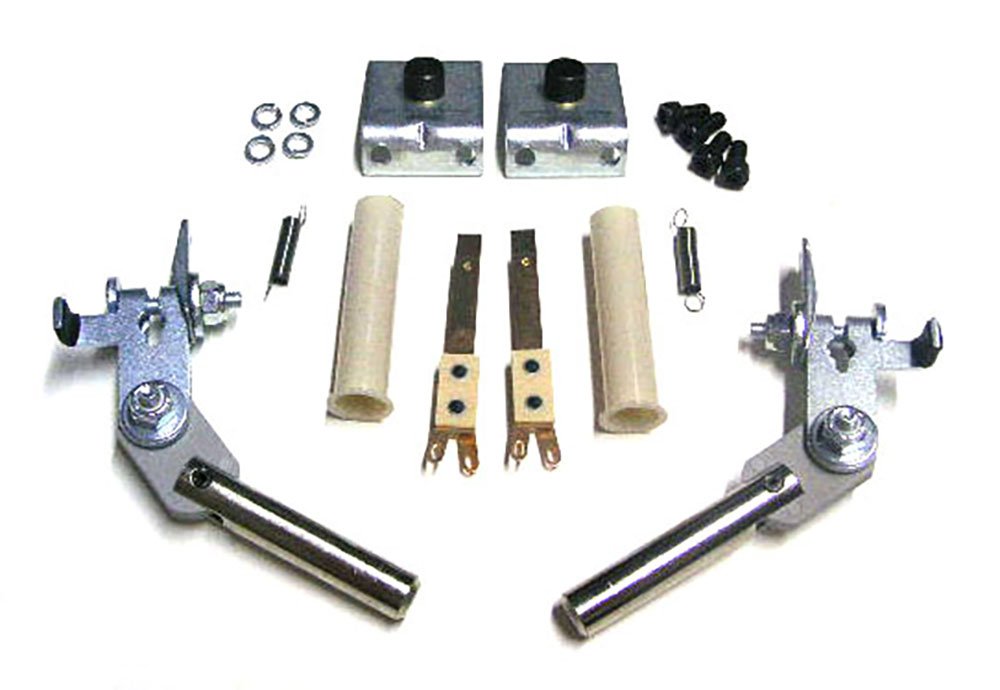
If you’ve ever played a pinball machine that felt sluggish — where the ball dribbled off the flipper instead of rocketing to the top of the playfield — you’ve experienced flipper wear firsthand. The flipper is the paddle-shaped bat you control with the side buttons, and it’s the single component you interact with on literally every shot. Over thousands of plays, the rubber sleeve that grips the ball degrades, the mechanical linkage underneath loosens, and the spring tension goes soft. The machine still works, but it stops feeling crisp and accurate. A flipper rebuild kit — a small bag of replacement parts including new rubber, springs, bushings, and coil sleeves — is the fix. It costs between $30 and $80 depending on the machine, takes a few hours, and when done right it makes a tired game feel like it just came off the factory floor. This guide breaks down exactly what’s in a kit, when to upgrade versus simply rebuild, and how to decide which bat style fits your goals.
| EDITOR'S PICK[Williams Bally Chicago Gaming J…](https://www.amazon.com/dp/B00907X44I?tag=greenflower20-20) | Mid-tier[Game Room Guys Universal Pinbal…](https://www.amazon.com/dp/B004QYME78?tag=greenflower20-20) | Budget pick[Pinball Life Pinball Shooter Ti…](https://www.amazon.com/dp/B0CZF7GFDM?tag=greenflower20-20) | |
|---|---|---|---|
| Compatibility | WMS Bally CGC JJP Spooky | Universal | — |
| Contents | Rebuild parts | Shooter assembly | Shooter tip (5-pack) |
| Type | Flipper rebuild kit | Shooter assembly | Shooter tip |
| Quantity | — | 1 | 5 |
| Color | — | — | White |
| Price | $39.99 | $39.99 | $9.99 |
| See on Amazon → | See on Amazon → | See on Amazon → |
Why Flippers Degrade Faster Than Almost Anything Else
Flippers sit at the intersection of mechanical stress and constant use. Every flip cycles a coil (an electromagnetic coil — essentially a solenoid that creates a magnetic pulse to snap the flipper up), a plunger, a pivot point, a return spring, and a rubber sleeve. Per Stern Pinball’s official parts and service documentation for Spike-2 platform titles, flipper coils are rated for several million activations — but the mechanical components surrounding them, especially the nylon bushing (the small plastic sleeve the flipper shaft rides in) and the coil sleeve (the smooth tube inside the coil), wear measurably faster.
The symptom progression, as documented in Pinball Magazine’s Issue 12 feature on collector machine maintenance, usually follows a predictable arc:
- Rubber hardens or cracks — grip diminishes, ball trajectory becomes inconsistent
- Bushing wears oval — the flipper shaft develops side-play, killing accuracy
- Coil sleeve roughens — increased friction weakens the snap; the flipper feels soft
- Return spring weakens — the flipper hangs slightly raised at rest, changing geometry
By the time you notice a problem, all four are typically degraded to some degree. This is why experienced collectors on Tilt Forums’ flipper rebuild megathread consistently recommend replacing the full kit rather than chasing individual symptoms with single parts. The labor is the same; the parts cost is marginal.
What’s Actually in a Rebuild Kit — and What Isn’t
A standard flipper rebuild kit for most Stern or Williams-era machines includes:
- Flipper rubber (the bat sleeve, in various diameters by era)
- Coil sleeve (reduces friction inside the coil body)
- Flipper bushing (the nylon pivot sleeve)
- Return spring (restores rest-position geometry)
- EOS switch contacts (the End-Of-Stroke switch, which cuts power at full extension — critical for coil longevity)
- Flipper link or crank (on some kits for machines prone to fatigue-cracking these parts)
What most kits do not include: the flipper bat itself, the coil, or the coil stop (the rubber bumper that arrests the plunger). If your bat is chipped, grooved, or cracked — common on heavily-played route machines — budget for a bat replacement separately.
By the Numbers
| Component | Typical replacement interval | Part cost (2026 market) |
|---|---|---|
| Flipper rubber | 6–18 months (home use) | $2–$5 per machine |
| Coil sleeve | Every rebuild | $1–$3 per coil |
| Flipper bushing | Every rebuild or 2–3 years | $2–$4 per side |
| Full kit (Williams/Stern classic) | 2–5 years home / 6–12 months route | $15–$45 per machine |
| Premium aftermarket kit | Same interval, longer rubber life | $35–$80 per machine |
Pricing based on aggregate vendor data from Marco Specialties, Pinball Life, and Planetary Pinball Supply as of mid-2026.
Rebuild vs. Upgrade: Where the Bat Swap Decision Sits
A rebuild restores factory spec. An upgrade goes beyond it — and this is where the decision gets interesting for collectors who have moved past “just keeping it running.”
The Bat Itself: Standard vs. Upgraded Profiles
The flipper bat is the lever arm players see and touch. Factory bats on most Stern titles are injection-molded plastic in a standard geometry that balances durability and playability for general audiences. Two aftermarket directions dominate community discussion:
Cliffy Protectors and Comet Pinball rubber alternatives are the most widely discussed upgrade path on Tilt Forums — these aren’t bat replacements but rubber upgrades, improving grip and durability beyond OEM spec. Owners consistently report more consistent ball control on ramps and that rubber longevity extends noticeably beyond factory sleeves, particularly on machines with heavy loop shots.
Premium bat replacements — including options from Pinball Center and various boutique suppliers — offer alternative geometries: slightly longer bats for added reach, matte-finish bats for reduced ball deflection glare, and colored or translucent bats as aesthetic mods. Per the Pinball News overview of flipper mechanism maintenance, bat length changes trajectory geometry in ways that can matter competitively. A 0.25-inch longer bat changes the catch angle on center-drain saves meaningfully — but it also shifts the geometry of every shot you’ve calibrated for. Serious tournament players tend to leave factory geometry in place or match their home machine to tournament-spec machines they practice on, a preference echoed in IFPA-adjacent discussion boards.
The tradeoff to name explicitly: upgraded bats improve feel and aesthetics, but they change shot geometry. If you play on a machine that sees competitive or tournament use, deviation from factory spec may work against you. If the machine is purely home play or display-grade restoration, the mod is low-risk and genuinely enjoyable.
Machine-Specific Considerations That Actually Change the Math
Not all rebuild kits are created equal, and the machine you’re working on changes the decision frame.
Williams/Bally Solid State Era (late 1970s–1999)
These machines use a two-coil flipper system (a main power coil and a hold coil) controlled by the EOS switch. The EOS switch is the most failure-prone component in this generation — a slightly misadjusted EOS causes either coil burn (if it never opens) or weak flippers (if it opens too early). Per IPDB’s cross-reference documentation, Williams EOS switch geometry varies meaningfully between titles from the same era, so pulling the machine-specific schematic before ordering parts is non-negotiable.
Kits for this era: Marco Specialties and Pinball Life both maintain machine-specific kits rather than generic ones. Spending the extra $5–$10 for a title-specific kit over a universal kit is worth it.
Stern Spike-2 Platform (2016–present, titles like Deadpool, Maiden, Godzilla)
Stern’s Spike-2 system uses a single-coil design with a different hold-circuit architecture — no traditional EOS switch in the same sense. Rebuilds on Spike-2 machines are mechanically simpler, but the coil assemblies are proprietary and the bushing tolerances are tighter. Stern’s official parts documentation recommends against third-party coil sleeves for in-warranty machines, though once out of warranty, owners report standard aftermarket sleeves (from Pinball Life and similar) perform comparably.
Jersey Jack Pinball and Spooky Pinball boutique titles
These manufacturers use Stern-derived flipper mechanisms in many cases (Jersey Jack Pinball), or custom mechanisms (Spooky’s designs vary by title). JJP’s official parts program is documented on their site; Spooky machines warrant forum research (Tilt Forums has active threads per title) before ordering, because substitution compatibility isn’t always clean.
How to Evaluate Whether Your Flippers Need Work Right Now
If you’re standing in front of a machine trying to make a call — whether you’re buying used or assessing something already in your collection — run this quick diagnostic:
-
Hold the flipper button up and look at the bat’s resting raised angle. It should sit near the top of the lane, crisp and firm. Soft hold = weak coil sleeve or failing EOS. Slightly dropped rest angle = worn return spring.
-
Release the button and watch return speed. A healthy flipper snaps down decisively. Slow return = weak return spring or shaft drag from a worn bushing.
-
Push the bat side-to-side with the machine off. Any lateral play = worn bushing. This is the single most common cause of shot inconsistency that players mis-diagnose as “the machine plays weird.”
-
Inspect the rubber sleeve visually. Cracking, glazing, or flat spots are immediate replacement triggers. Pinball Magazine’s maintenance feature notes that glazed rubber (shiny, hardened surface) actually reduces ball control more than cracked rubber because it kills friction uniformly.
If three or four of these show wear, you’re doing a full rebuild. If only the rubber is gone, spot replacement is defensible — but know that the rest of the kit will need attention within 12–18 months anyway, and the labor cost of doing it twice exceeds the $20 part cost of doing it once.
The Decision Rule
Here’s the clean if/then framework based on everything above:
-
If you’re buying a used machine and age/condition is unknown: budget a full rebuild kit into your offer price and do it before you play a single game. The cost is $30–$80 and two hours. The alternative is diagnosing mystery wear after you’ve already played on it.
-
If you’re maintaining a home machine under regular play: rebuild flippers every 2–3 years regardless of feel, and inspect rubber annually. Preventive rebuild on a $6,000 Stern title costs $50; a coil burn from a failed EOS costs $30–$60 in parts plus aggravation.
-
If you’re running a route or commercial location: rebuild interval drops to every 6–12 months based on play volume. Operators on Tilt Forums consistently report that deferred flipper maintenance is the most common cause of playfield damage from uncontrolled ball movement, making this one of the clearest ROI cases in the hobby.
-
If you want the upgrade, not just the rebuild: swap rubber to a premium aftermarket option, but leave bat geometry factory-spec unless this is a dedicated home machine with no tournament use and you’ve deliberately calibrated for the new geometry.
-
If you’re considering a bat length change: play 50 games on factory spec first, document the shots that feel broken, then evaluate whether geometry change actually solves that specific problem. More often than not, the issue is rebuild-related, not geometry-related.
The flipper rebuild is the unglamorous upgrade that outperforms most of the glamorous ones. It doesn’t show up in photos. It won’t get thread attention on Pinside. But every experienced collector who works through one comes away saying the same thing: this is the one mod that actually changes how the game plays, every single session.